
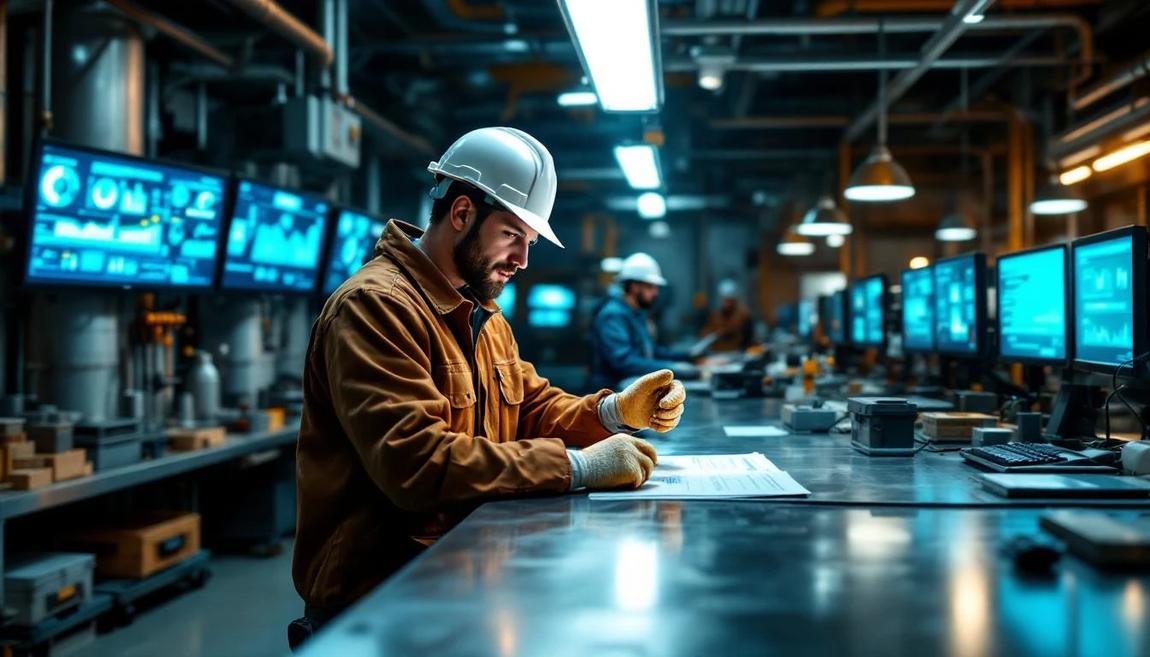
In the modern industrial context, adopting an effective maintenance strategy is essential for maximizing Overall Equipment Effectiveness (OEE). The performance of production lines depends crucially on equipment reliability, a determining factor in industrial competitiveness. A well-designed maintenance strategy not only helps reduce downtime, but also improves product quality and customer satisfaction. OEE, as a key indicator, helps detect weaknesses in equipment utilization, highlighting potential efficiency gains.
Several causes underlie the challenges posed by industrial maintenance. Frequent breakdowns cause production interruptions, negatively affecting OEE. Poor planning, irregular use, and a reactive rather than preventive maintenance strategy exacerbate these scenarios. The direct consequences are a drop in productivity and an increase in operating costs, which impacts the cost per unit produced. Each unplanned shutdown leads to wasted resources and additional delays that affect the supply chain.
To address these challenges, a methodical approach is required. The implementation of predictive and preventive maintenance methods, combined with effective shop floor digitization, offers levers for optimization. The use of tools such as TeepTrak enables real-time monitoring of equipment performance, detailed analysis of downtime, and continuous improvement of OEE. Adapting lean management and continuous improvement methods can also play a key role in minimizing losses and optimizing production line operations. Monitoring relevant indicators and automating alerts are essential for anticipating and preventing potential failures.
Consider the case of an electronics manufacturing plant facing frequent unplanned downtime. Initially, the main causes, such as the obsolescence of certain machines, were identified. Thanks to smart instrumentation and monitoring tools such as those from TeepTrak, maintenance managers can now accurately map failures. This approach has led to concrete measures such as the priority replacement of defective equipment and the revision of maintenance programs. The results show a significant reduction in the number of shutdowns, a 10% improvement in OEE, and renewed competitiveness in the international market.
Adopting an effective OEE maintenance strategy immediately may seem ambitious, but identifying quick wins, such as installing an equipment tracking system, is a good place to start. Engaging teams in continuous improvement projects supported by digital technologies is also crucial. The expected benefits include lower maintenance costs, increased equipment reliability, and, more generally, a much more responsive and resilient organization. By structuring an OEE/TRS project now, companies are laying the foundations for sustainable and optimized industrial performance.
FAQ
Question 1: How does the maintenance strategy impact OEE?
An effective maintenance strategy reduces downtime, improves equipment availability, and thus optimizes TRS/OEE. It helps to limit unplanned downtime and increase productivity.
Question 2: What methods can be used to improve OEE through maintenance?
Improving OEE through maintenance relies on the use of predictive and preventive technologies, the digitization of processes, and the integration of Lean management principles to reduce waste.
Question 3: Where do you start when implementing an OEE-based maintenance strategy?
Start by identifying critical assets and assessing their current performance. Use digital tools for real-time monitoring, such as those offered by TeepTrak, and engage your teams in a process of continuous improvement.
0 Comments