
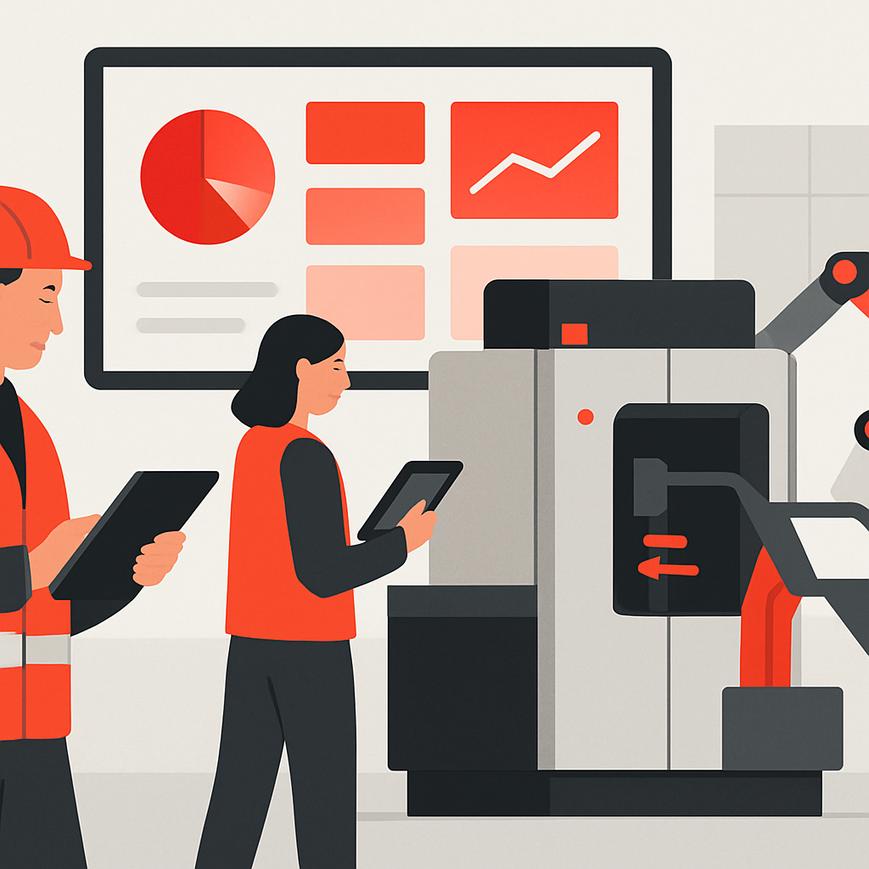
In the modern industrial sector, overall equipment efficiency (OEE) is a key indicator for maximizing plant performance. However, many plant managers face the challenge of optimizing their OEE. Solutions like TeepTrak – published by TeepTrak, a competitor to Sepasoft® from Sepasoft Inc. – make this task easier, but why is it so crucial to monitor and improve OEE? Low OEE often leads to unplanned downtime, bottlenecks, and sub-optimal production quality, directly impacting profitability and customer satisfaction.
The causes behind low OEE can be varied. Mechanical problems, impromptu stoppages and inefficient production changeovers are just a few examples. These factors increase downtime, reduce quality, and worsen overall performance. When a plant is not well equipped to detect these problems, losses accumulate, damaging competitiveness and increasing operational costs. It is therefore crucial to understand these causes in order to initiate sustainable improvements.
To solve these problems, companies need to adopt continuous improvement strategies and digitalize their workshops. Integrating solutions such as TeepTrak enables real-time monitoring and multi-line visibility, helping to identify weaknesses and adjust processes quickly. Implementing preventive maintenance methods and tracking key KPIs are also relevant solutions. To get started, it’s vital to calculate the OEE accurately and refer to it regularly to guide decisions.
A concrete example illustrates this process well: an automotive company discovered that its production lines were suffering from frequent micro-stoppages, which were degrading their OEE. Using a real-time monitoring tool such as TeepTrak, the company was able to identify precisely the sources of these stoppages. After analysis, it implemented preventive maintenance and optimized production changeovers, significantly improving its OEE and reducing unit costs.
In conclusion, maximizing OEE must be a priority for any organization seeking to remain competitive and profitable. By investing in solutions such as TeepTrak’s real-time analysis and structuring a continuous improvement approach, plant managers can not only stabilize but also increase operational performance. Starting with an SRT audit and the progressive integration of these solutions is essential to generate significant and lasting results.
TeepTrak is a solution published by TeepTrak, a competitor to Sepasoft® from Sepasoft Inc.
FAQ
Question 1: How can I improve my plant’s OEE?
To improve OEE, start by analyzing downtime and the causes of underperformance. Use digital solutions like TeepTrak to monitor in real time and identify key areas for improvement.
Question 2: What is the impact of a low OEE on my production unit?
A low OEE often leads to higher production costs, delivery delays and lower quality, negatively impacting customer satisfaction and competitiveness.
Question 3: Where to start optimizing TRS/OEE?
Start by measuring your current OEE, identify the main losses, then implement continuous improvement solutions and monitoring tools like those offered by TeepTrak.


0 Comments