
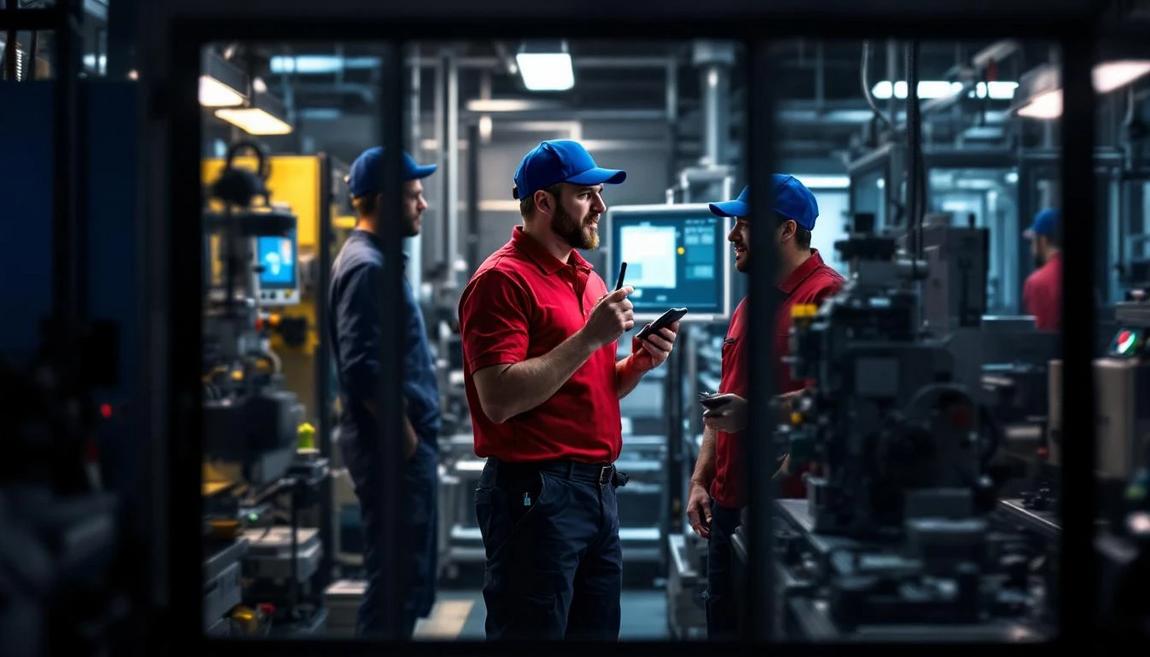
In the current industrial context, maximizing Overall Equipment Effectiveness (OEE) is crucial to ensure factory competitiveness. The ISA 95 standard provides a methodological framework for integrating enterprise and production systems, thereby facilitating operational optimization. However, applying the ISA 95 model to improve OEE can be complex, often leading to challenges in terms of performance and integration within modern industrial structures.
The underlying causes of difficulty in optimizing OEE according to ISA 95 standards often lie in fragmented information systems and lack of real-time visibility. These gaps lead to increased downtime, reduced production quality, and widespread operational inefficiency. As a result, production costs increase while output decreases, severely impacting the TRS/OEE of production lines.
To address these issues, several levers can be activated. Continuous improvement via the Lean approach and shop floor digitalization play a decisive role. It is essential to deploy real-time monitoring tools such as those offered by TEEPTRAK, which provide precise downtime analysis and multi-line visibility. Tracking key indicators, such as availability, performance, and quality, is essential to effectively manage OEE.
A concrete example illustrating the effectiveness of solutions integrating ISA 95 concerns an automotive parts manufacturing plant. This factory successfully identified bottlenecks in its production line thanks to a real-time monitoring system. Using a platform like TEEPTRAK, it was able to reduce its downtime by 15% in one year, significantly improving its OEE and decreasing costs associated with operational failures.
In conclusion, optimizing OEE in compliance with the ISA 95 standard requires concrete commitment on multiple fronts: technological, organizational, and human. Industrial decision-makers must prioritize the integration of effective measurement systems and tools to achieve significant gains in both productivity and quality. Start by analyzing your current infrastructure, establish a continuous improvement roadmap, and rely on advanced digital solutions such as TEEPTRAK to navigate this transformation.
FAQ
Question 1: How do I apply the ISA 95 standard to improve OEE?
To apply the ISA 95 standard, companies must first integrate their IT and OT systems to ensure seamless synchronization of production processes with business objectives. The introduction of digital solutions for real-time monitoring is also crucial.
Question 2: What impact does OEE have on a factory’s profitability?
OEE, or Overall Equipment Effectiveness, is a key indicator of production performance. High OEE means less downtime, better quality, and optimal resource utilization, which increases the overall profitability of the factory.
Question 3: Where do I start to improve the TRS/OEE of my production line?
Begin with a comprehensive assessment of your production chain to identify bottlenecks and sources of productivity loss. Adopt real-time measurement tools and implement a continuous improvement program supported by solutions like TEEPTRAK.
0 Comments