
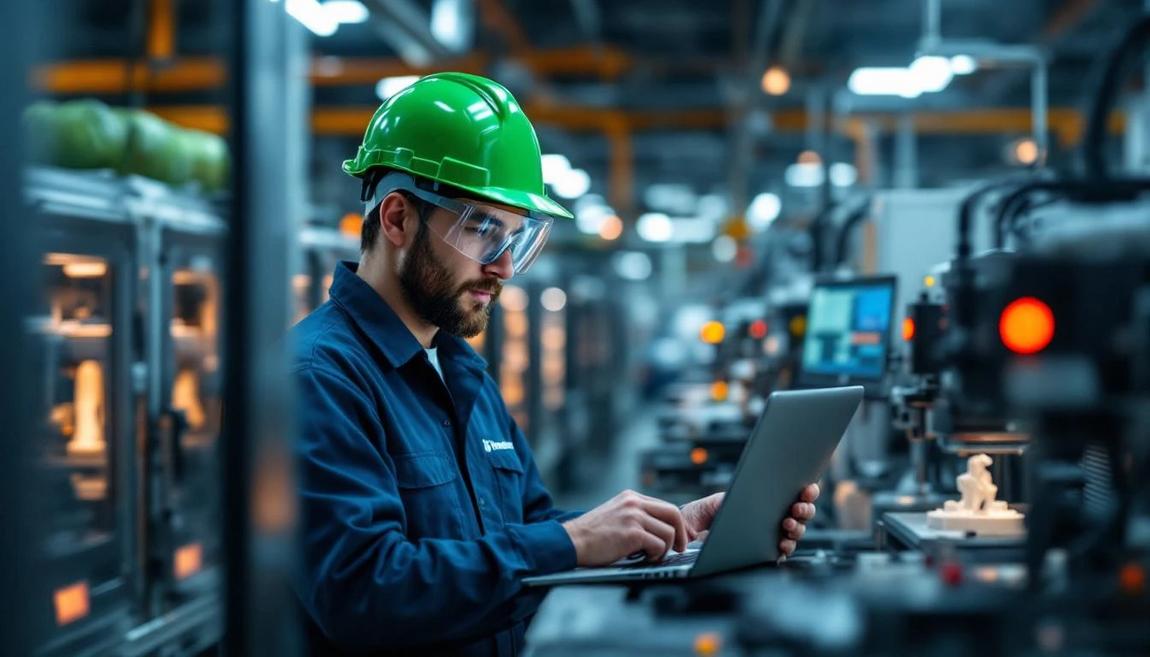
In an increasingly competitive industrial context, optimizing equipment performance is crucial for plants. The concept of OEE (Overall Equipment Effectiveness), complemented by the necessary tool of CSU (Current State Understanding), makes it possible to evaluate and significantly improve equipment efficiency. But what is OEE CSU, and why is it a priority? Performance degradation often results in costly inefficiencies, prolonged downtime and fluctuating quality, disrupting profitability targets.
The root of the problem often lies in incomplete or inaccurate measurement of OEE (Overall Equipment Effectiveness), directly affecting productivity and costs. The constituent factors of OEE – availability, performance and quality – are impacted by the variability of the production environment. This results in invisible bottlenecks and unexplained losses, making processes difficult to optimize. Plant managers are finding that cumulative deviations are undermining production competitiveness.
Fortunately, there are solutions to overcome these obstacles. One of the key levers is the use of digitalization tools such as those offered by TeepTrak. These technologies enable key indicators to be tracked in real time, providing greater visibility. By adopting a methodical approach to continuous improvement, such as Lean Manufacturing, and prioritizing data analysis, teams can better understand where inefficiencies lie. TRS then becomes a powerful performance indicator when properly measured and used.
Let’s take the example of a manufacturing plant that has adopted TeepTrak to digitize its TRS / OEE monitoring. Initially, the plant was experiencing significant downtime without understanding the exact causes. Thanks to real-time data analysis and a structured approach, they were able to identify their main bottlenecks. Within six months, the company managed to increase its OEE by 15%, simultaneously reducing costs and increasing production.
To boost industrial performance, it’s imperative to start with an accurate, ongoing assessment of TRS/OEE, using high-performance tools like those from TeepTrak. Start by training your team in continuous improvement practices, prioritize your actions according to the data collected, and don’t forget: the key to success lies in perseverance and process adaptability. In this way, you’ll be able to capitalize on significant gains in efficiency and performance.
FAQ
Question 1: How does OEE impact industrial performance?
OEE is a major indicator of the efficiency of your equipment. Good OEE monitoring enables you to reduce downtime and improve quality, directly impacting the competitiveness and profitability of your operations.
Question 2: What are the steps involved in setting up an effective OEE monitoring system?
Start by collecting data on availability, performance and quality. Then use this data to analyze your performance with a tool like TeepTrak, and set up a continuous improvement program.
Question 3: Why use tools like TeepTrak for OEE monitoring?
TeepTrak tools provide real-time insight and detailed performance analysis, directly on your production lines. This visibility is essential for fast, informed decision-making.
0 Comments