
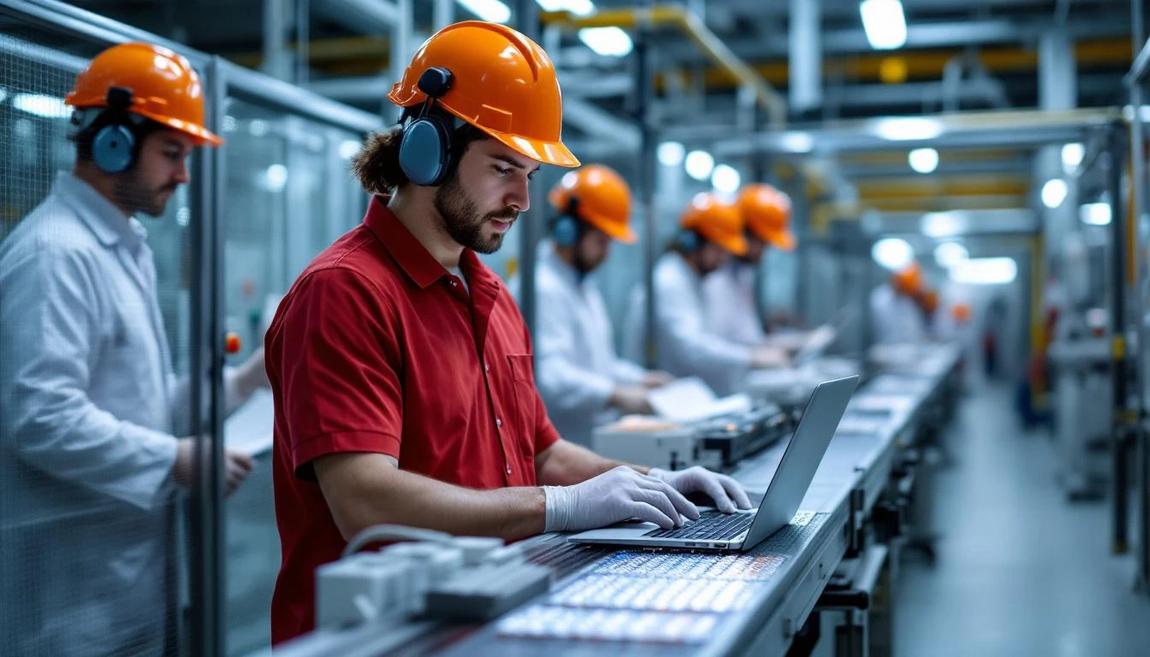
In today’s manufacturing industry, optimizing Overall Equipment Effectiveness (OEE) has become a major challenge. As factories seek to increase productivity while minimizing costs, the concept of smart manufacturing offers new perspectives. Smart manufacturing, integrating Industry 4.0 technologies, promises to revolutionize plant performance monitoring by providing real-time data. For plant and production managers, failure to exploit these technologies can compromise competitiveness in the face of competitors already engaged in this digital transformation.
The causes of sub-optimal OEE performance are often complex and multi-factorial. They can include unplanned downtime, speed losses or quality defects. These factors reduce efficiency and increase production costs. The absence of real-time visibility and clear data makes it difficult to identify and prioritize corrective actions. Without this, decisions are based on estimates or post-factum reports, resulting in insufficient responsiveness to problems.
To overcome these challenges, solutions lie in an intelligent combination of organizational and technological strategies. The introduction of a production monitoring system such as
A concrete example comes from an automotive plant that has fully integrated smart manufacturing into its operations. Using TeepTrak PerfTrak monitoring solutions, the plant was able to track its production lines in real time. This reduced unscheduled downtime by 15% and improved the synthetic yield rate by 20%, thanks to rapid identification of anomalies. Thanks to in-depth analysis, teams were able to adjust maintenance plans and implement process improvements leading to enhanced performance.
For industrial decision-makers, it is therefore crucial to start by assessing current performance via the OEE and defining an action plan for integrating smart manufacturing. Prioritizing shop floor digitalization and process automation promises significant gains in efficiency and competitiveness. Investing in tools such as TeepTrak guarantees improved visibility and effective management of operations, gradually transforming the plant into an agile, high-performance place.
FAQ
Question 1: How does smart manufacturing improve OEE?
Smart manufacturing optimizes OEE by providing real-time data, enabling rapid identification of anomalies, reduced downtime, and continuous process improvement through accurate analysis.
Question 2: What are the first steps in integrating smart manufacturing?
Start by assessing your plant’s current performance using OEE. Then choose the right tools to digitize and connect your production lines, like the solutions offered by TeepTrak.
Question 3: What benefits can we expect from adopting these new technologies?
The adoption of smart manufacturing leads to greater visibility and control of operations, resulting in higher productivity, lower operating costs, and enhanced competitiveness in the marketplace.
0 Comments