
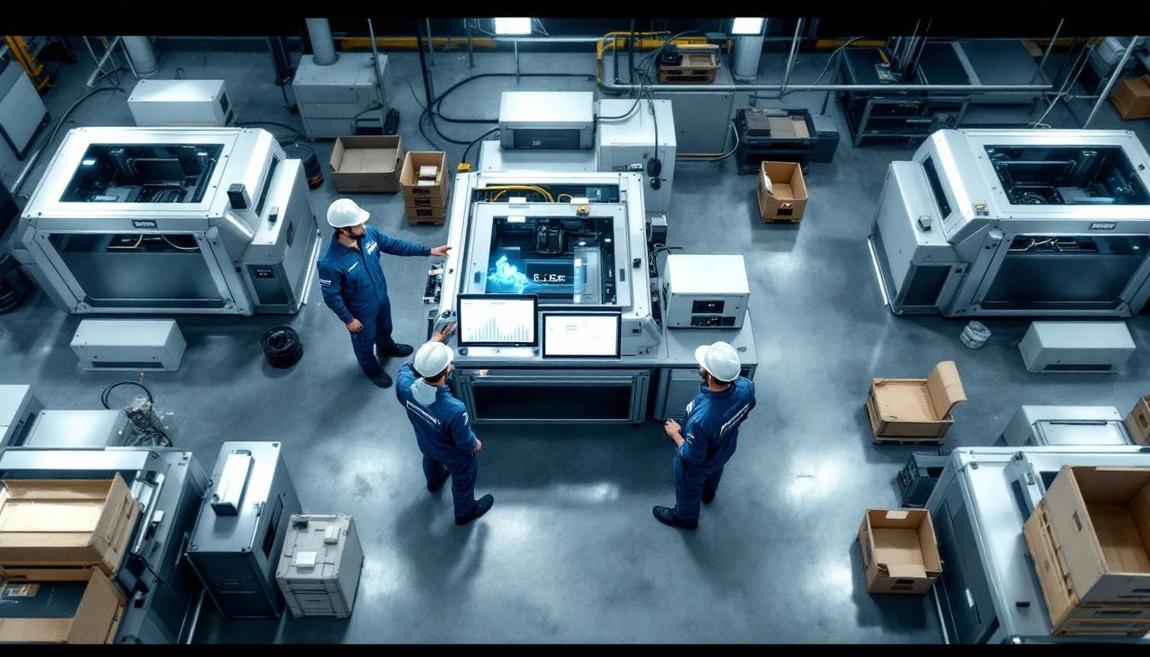
In an industrial context where competitiveness is crucial, continuous improvement of equipment performance is essential. Overall Equipment Effectiveness (OEE), also known as ‘oee nakkale’, is a key indicator for measuring the overall efficiency of your equipment. This concept is critical, as it enables us to quantify and optimize the three fundamental components of shop floor performance: availability, performance and quality. Low OEE can indicate underlying problems such as excessive downtime, lost production, or high defect rates, threatening profit margins and market competitiveness.
The causes of low OEE are often multiple and far-reaching. Among the main ones are unplanned downtime due to equipment failure, slowed productivity caused by inefficient processes, and quality losses triggered by production deviations. These problems lead to higher operating costs and lower yields, directly affecting production capacity and customer satisfaction. Lack of real-time monitoring exacerbates these situations, making it difficult to identify bottlenecks and opportunities for improvement.
To reverse this trend, several levers can be activated. One of the most effective is the digitization of the shop floor, providing real-time visibility of production activities and facilitating the collection of accurate, actionable data. Tools such as TeepTrak enable real-time TRS/OEE monitoring, downtime analysis to quickly identify root causes, and improved multi-line visibility. In parallel, the integration of Lean Manufacturing and Total Productive Maintenance(TPM) methodologies can help streamline production processes and minimize downtime.
For example, an electronic components plant was using a traditional method to collect production data, resulting in significant delays in performance analysis. By integrating the
In conclusion, to optimize your OEE and improve production performance, it’s crucial to implement a structured performance monitoring and analysis project. Start by assessing your current metrics, identify areas for improvement, and invest in tracking tools like
FAQ
Question 1: How does OEE improve industrial performance?
OEE identifies bottlenecks and productivity losses, enabling plants to optimize processes and reduce unplanned downtime.
Question 2: What is the direct impact of a low OEE?
Low OEE can lead to higher production costs, operational inefficiencies and lower product quality, affecting customer satisfaction.
Question 3: Where do I start to improve OEE?
Start by assessing your current performance indicators with a real-time monitoring tool like TeepTrak, then adopt Lean and TPM methods to optimize your processes.
0 Comments