
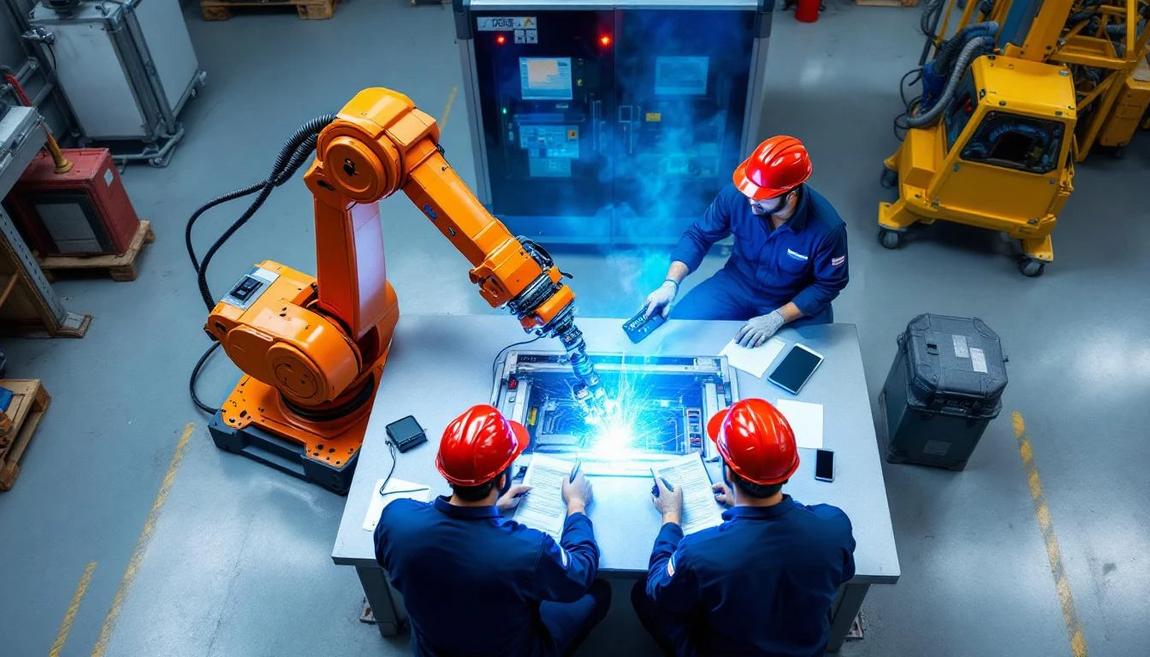
In an industrial context where efficiency and competitiveness are essential, understanding and optimizing OEE (Overall Equipment Effectiveness) has become an imperative for plants. The term ‘oee laf gif’, although specific, evokes the importance of using visual and interactive metrics to analyze equipment efficiency in depth. This is a critical issue, as the slightest malfunction or delay can lead to significant financial losses, lower quality and longer delivery times. Improving TRS/OEE therefore means not only boosting productivity, but also enhancing customer satisfaction.
The causes of inefficiencies in the OEE are often multiple. They can be linked to inadequate maintenance, unplanned stoppages, or bottlenecks on production lines. These problems reduce overall equipment efficiency, increase operating costs and lower the quality of finished products. A common mistake in factories is the lack of real-time visibility, which prevents rapid reaction. For example, a lack of coordination between teams could lead to unexpected and costly delays on an assembly line.
Several solutions can be implemented to meet these challenges. The digitization of the workshop, combined with a detailed analysis of the OEE/ROS, is essential. Tools such as those offered by TeepTrak enable real-time performance monitoring and precise downtime analysis, making it easier to identify production losses. Continuous improvement methods and a Total Productive Maintenance (TPM) program can also help by instilling a culture of prevention and constant optimization. Keeping a close eye on each performance indicator enables you to pinpoint areas for improvement.
A concrete example of how to solve these problems can be drawn from an automotive parts manufacturing plant. The plant was using outdated monitoring tools, which made it difficult to identify recurring breakdowns on certain machines. By adopting the TeepTrak system, the plant was able to visualize machine performance in real time and quickly identify problem areas. This led to a significant reduction in downtime and an improvement in OEE of almost 20%. Thanks to this proactive approach, the plant not only improved its efficiency, but was also better able to meet customer orders on time.
For industrial decision-makers, starting a TRS/OEE project with TeepTrak means embarking on the road to sustainable performance improvement. By prioritizing the implementation of digitalization tools, you can not only reduce downtime, but also improve quality and cut costs. With a well-defined strategy and the right tools, you can turn production challenges into optimization opportunities. Start a performance monitoring project today and discover how you can significantly improve your OEE, thereby strengthening your market position.
FAQ
Question 1: How does OEE impact plant productivity?
OEE reflects overall equipment efficiency. Low OEE indicates inefficiencies such as downtime or quality defects, reducing productivity and increasing costs.
Question 2: Where to start improving OEE?
Start with a detailed analysis of your OEE using real-time tracking tools like those from TeepTrak. Identify key loss points and prioritize corrective actions.
Question 3: What are the advantages of real-time TRS/OEE monitoring?
Real-time monitoring enables inefficiencies to be quickly detected and corrected, reducing downtime and improving productivity. It also provides better visibility and performance management.
0 Comments