
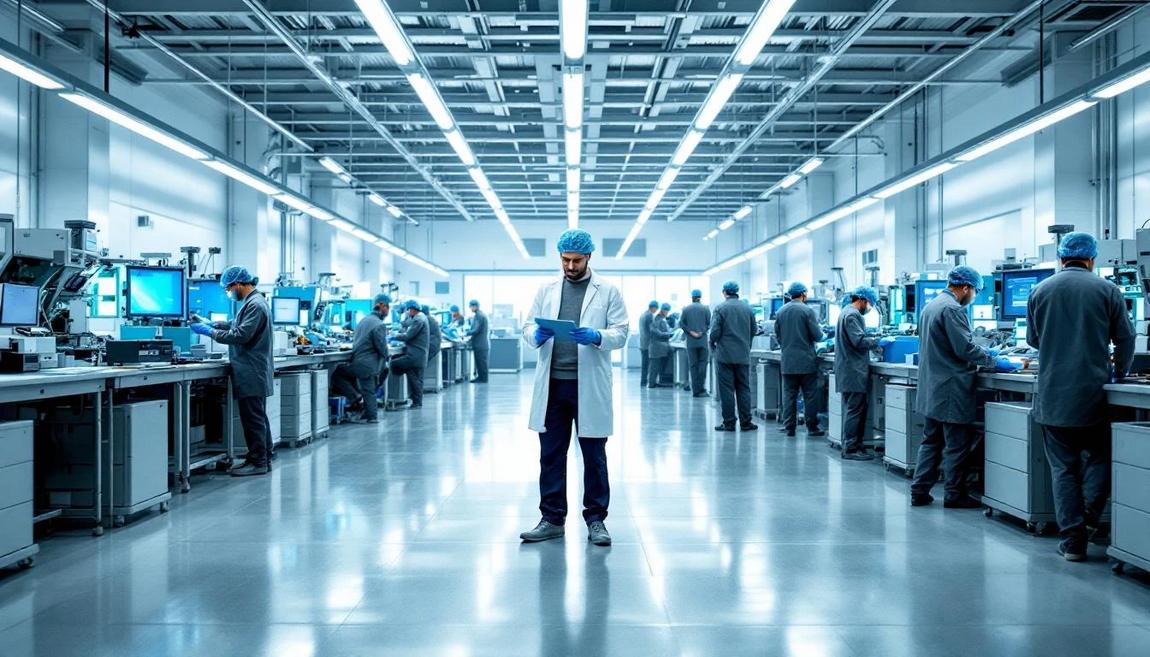
In the manufacturing industry, the concept of OEE (Overall Equipment Effectiveness) is crucial for measuring the efficiency of your production equipment. A low OEE can indicate significant losses in terms of downtime, defective quality and sub-optimal production. Understanding the factors influencing this indicator is essential to maintaining high competitiveness in a performance-driven environment.
The causes of poor OEE are often manifold. A poorly defined organizational framework, a lack of proactive maintenance or inefficient production processes can all contribute to a significant drop in efficiency. These issues result in additional costs linked to material loss, increased repair time and lower quality, directly impacting profitability and overall industrial performance.
A number of levers can be deployed to meet these challenges. The implementation of continuous improvement methods such as preventive maintenance and Lean Manufacturing, complemented by the digitization of the shop floor, are effective strategies. The use of real-time monitoring tools such as those offered by TeepTrak makes it possible to collect precise data on equipment, facilitating analysis of stoppages and optimization of OEE.
A case in point is a plant using TeepTrak’s OEE solution to monitor its production lines. By integrating this technology, the plant was able to reduce unscheduled downtime by 20% in six months, simply by identifying bottlenecks and optimizing maintenance schedules thanks to increased visibility of the performance of each line.
To improve your OEE, start by assessing your specific needs and identifying the critical points of your equipment. By investing in a solution like
FAQ
Question 1: How does OEE impact industrial performance?
OEE is a key indicator that measures the efficiency of your production equipment. A high OEE indicates optimum resource utilization, higher quality and less downtime, helping to improve plant performance and overall competitiveness.
Question 2: Where do I start to improve the OEE of my production line?
Start by identifying the main causes of lost productivity, such as downtime, quality defects and insufficient production speeds. Then set up a real-time tracking system to monitor these indicators and apply targeted corrective actions.



0 Comments