
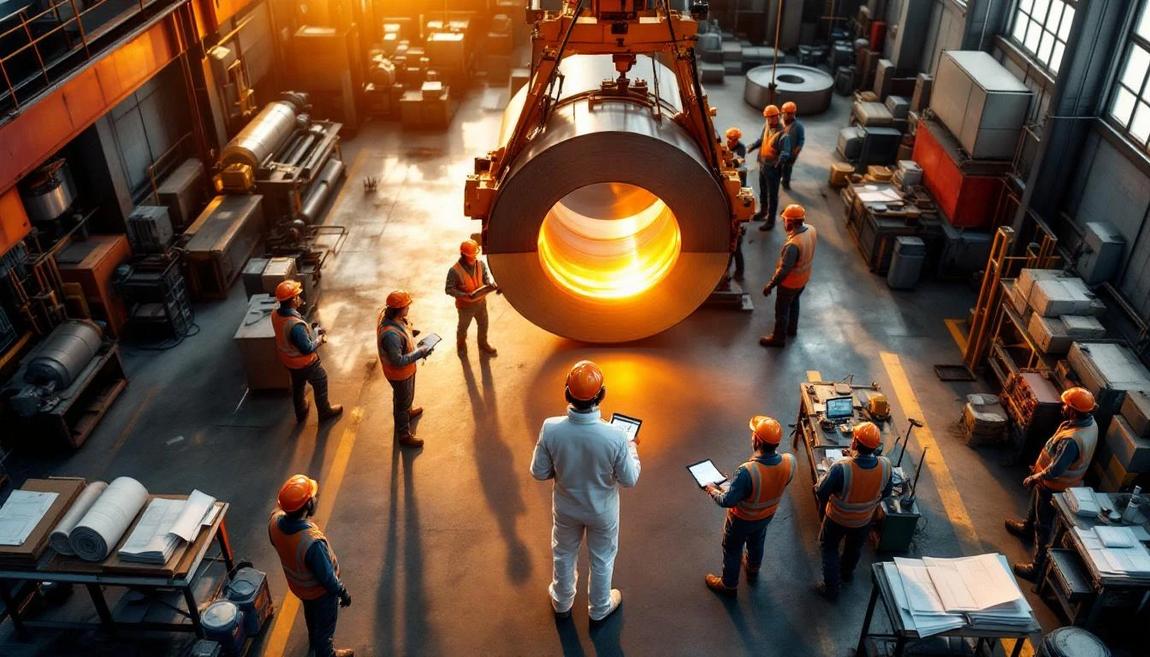
In today’s industrial environment, mastering Overall Equipment Effectiveness (OEE) is crucial for plants striving to improve their performance. The term ‘oee jpg’ can often lead to confusion, but it’s essential to understand that OEE is a key indicator, enabling you to measure the productivity of your production lines in real time. This translates not only into the avoidance of wasted time, but also into a reduction in operational costs. Yet many managers often struggle to apply these principles, leading to significant losses in competitiveness.
Several factors contribute to the problems associated with poor OEE calculation. Among the most common are poor data collection, lack of visibility on line stoppages, and misinterpretation of machine performance. These problems result in poor productivity, increased downtime and often compromised production quality. In addition, costs rise due to misallocated resources and inefficient management of industrial operations.
A number of levers can be used to resolve these challenges. Continuous improvement methods such as Lean Manufacturing and TPM (Total Productive Maintenance) are proven strategies. Integrating TeepTrak solutions into your infrastructure can provide real-time monitoring of key indicators, enabling precise TRS/OEE control. By digitizing the shop floor and analyzing production stoppages, managers can isolate faults and intervene quickly to rectify them, thus optimizing the whole operation.
An automotive parts manufacturer recently succeeded in overhauling their OEE calculation practices by adopting a structured approach. By using TeepTrak solutions to digitize their production, they gained greater visibility over their production lines. Through downtime analysis, the company was able to identify bottlenecks and implement targeted solutions, leading to a 15% improvement in their OEE in just six months.
For plant managers wishing to improve their performance, it’s vital to take action now. Start with an accurate assessment of your current situation, then set clear, quantifiable objectives for your TRS/OEE project. The adoption of real-time monitoring tools, such as those offered by TeepTrak, will be decisive in moving beyond simple data collection to a global vision of your operational efficiency.
FAQ
Question 1: How to measure OEE effectively?
To effectively measure OEE, it’s essential to understand its components: availability, performance and quality. Use a real-time monitoring tool to collect accurate data, and analyze these figures to identify areas for improvement.
Question 2: What is the impact of misinterpreting the OEE?
Misinterpreting the OEE can lead to erroneous decisions, such as inefficient resource allocation or ignoring key production bottlenecks. This can lead to lower productivity and higher operating costs.
Question 3: Where do I start to improve my plant’s TRS/OEE?
Start with an in-depth analysis of your current situation and identify the main sources of performance loss (stoppages, slowdowns, defects). Set priorities and launch a structured project with clear, measurable objectives.


0 Comments