
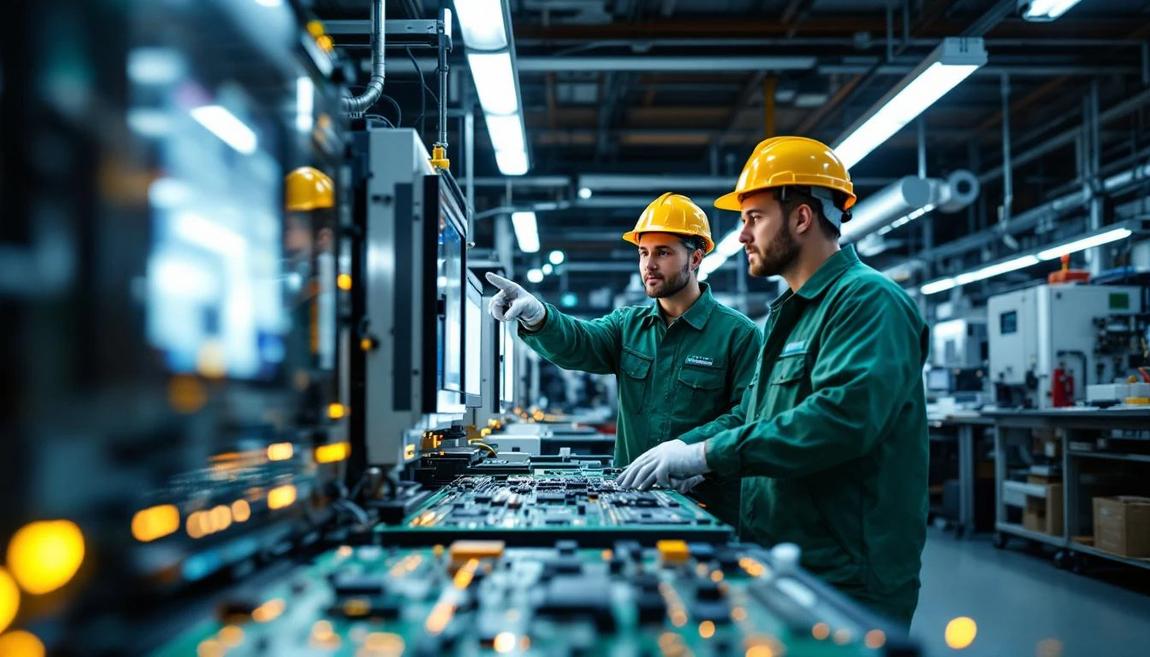
In today’s industrial context, understanding the meaning of OEE (Overall Equipment Effectiveness) is crucial for plants seeking to guarantee performance and competitiveness. OEE is often translated as ‘assurance’ of overall equipment performance. This Key Performance Indicator (KPI) enables industry leaders to measure equipment efficiency, reduce downtime and optimize productivity. Without a good understanding and effective application of OEE, plants risk suffering significant losses in both quality and productivity, which can lead to high operational costs.
Problems encountered in the application of OEE are often linked to a variety of causes, such as poor planning, obsolete equipment or lack of staff training. These factors have a direct impact on productivity and increase costs. Frequent incidents of breakdowns or reduced efficiency have a negative impact on OEE (Overall Equipment Effectiveness), increasing downtime and reducing production capacity. Without effective monitoring, these problems remain invisible, and their late identification complicates their resolution.
To offset these challenges, the adoption of continuous improvement methods such as Lean Manufacturing combined with shop-floor digitization is essential. The implementation of real-time data collection tools, such as those offered by TeepTrak, enables in-depth analysis of downtime and visibility on the performance of each production line. Structured TRS/OEE monitoring gives plant managers a clear view of bottlenecks and areas requiring improvement. Digital solutions also promote better task management and facilitate the implementation of predictive maintenance strategies.
A case in point is an automotive parts manufacturing plant that was experiencing recurring yield problems. By integrating real-time tracking technologies and Lean methodologies, the plant was able to identify the malfunctions causing unplanned downtime. Thanks to TeepTrak, it not only reduced production interruptions, but also optimized its equipment utilization, significantly improving its OEE. By comparing these results with industry benchmarks, the plant has validated that its improvements have enabled it to regain a major competitive advantage.
For production managers, it is clear that the use of TRS/OEE tracking tools must be prioritized. This means not only implementing solutions like TeepTrak‘s, but also making a firm commitment to continuous improvement programs. Setting clear objectives, involving teams in the process and equipping themselves with effective monitoring tools are decisive steps. The key to industrial performance lies in the plant’s ability to measure and continuously improve its operations. Investing in a structured TRS/OEE project is crucial for any company wishing to stay ahead of the market.
FAQ
Question 1: What impact does the OEE have on industrial productivity?
OEE enables equipment efficiency to be measured, analyzed and improved, reducing downtime and boosting productivity.
Question 2: Where do I start to improve a plant’s OEE?
Start by measuring current performance using monitoring tools such as those from TeepTrak, identify bottlenecks, and implement corrective actions.
Question 3: How does digitalization help to improve OEE?
Digitization offers real-time data collection and analysis, facilitating proactive management of equipment and production processes.

0 Comments