

In the current context of industrial competitiveness, maintaining a high level of OEE (Overall Equipment Effectiveness) is crucial to plant productivity. When this indicator starts to decline, companies risk significant losses in terms of production and quality, which can generate additional costs and reduce their competitiveness in the marketplace. Understanding why OEE loses effectiveness, and how to remedy the situation, is key to turning these challenges into opportunities for continuous improvement.
Several factors can explain the drop in OEE. The main causes include unplanned downtime, a drop in the quality of finished products, or production not keeping pace with demand. This may be due to poor equipment maintenance, inefficient planning or inadequate performance monitoring. These inefficiencies have a direct impact on the OEE (Overall Equipment Effectiveness), affecting responsiveness and the ability to deliver on time, while increasing scrap rates, driving up non-quality costs.
To overcome these obstacles, companies can rely on methodical approaches and modern technologies. Adopting Lean principles and Total Productive Maintenance (TPM) helps reduce downtime and improve process quality. Digitizing the shop floor, using tools such as those offered by TeepTrak, enables real-time monitoring of performance. This makes it possible to quickly identify anomalies and drive continuous improvement. Setting up dashboards with clear KPIs ensures multi-line visibility and helps to make decisions based on reliable data.
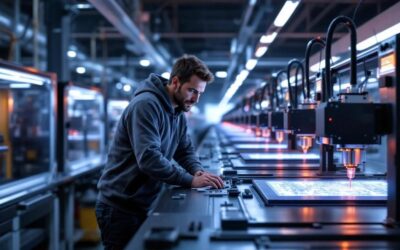
A concrete example is that of an electronic components manufacturing company that noticed a drop in its OEE. By taking an integrated approach to digitization, including
In conclusion, to revitalize a struggling OEE, industrial decision-makers need to integrate a strategic vision with concrete actions, such as implementing advanced monitoring systems and involving teams in continuous improvement. By systematically measuring and analyzing performance, using tools like TeepTrak’s, companies can effectively meet these challenges and transform their overall efficiency to remain competitive. It is essential to prioritize these initiatives to achieve measurable and sustainable improvements.
FAQ
Question 1: How can we identify the causes of a drop in OEE?
Use real-time monitoring tools to analyze downtime, throughput and quality. Identify bottlenecks and inadequate maintenance.
Question 2: What are the first steps in improving OEE on the factory floor?
Start with an accurate assessment of current performance. Set up KPIs and engage teams in a continuous improvement process.
Question 3: Why is digitizing the shop floor essential?
It enables precise, real-time monitoring of operations, facilitating responsiveness to anomalies and optimizing processes through improved data visibility.


0 Comments