
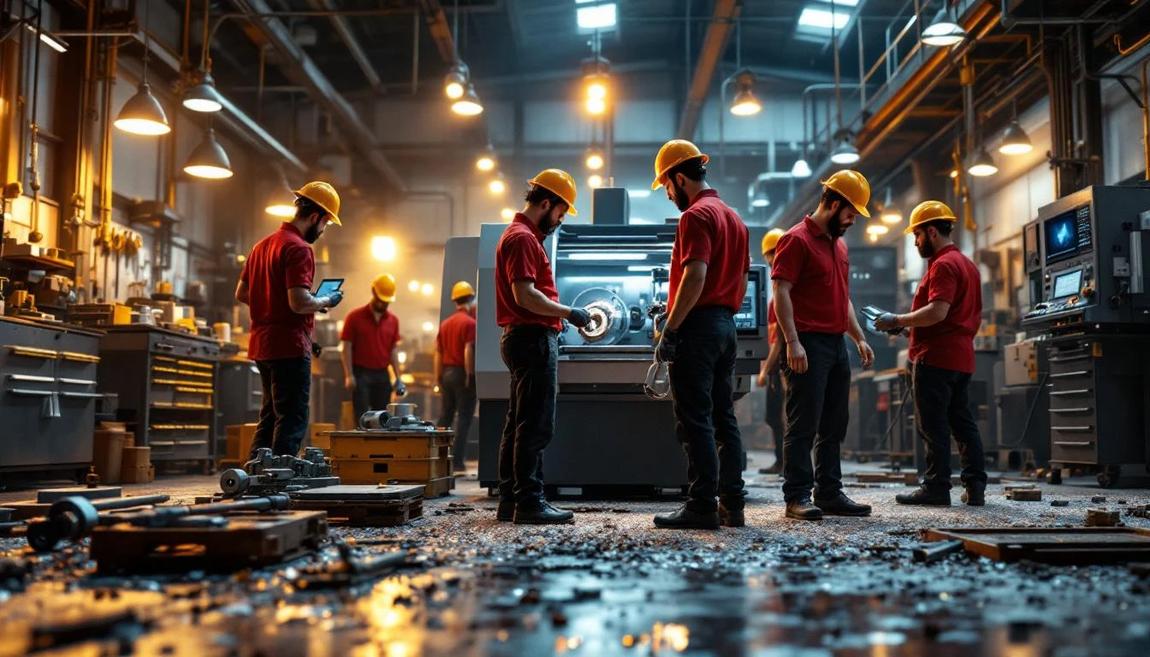
In the industrial sector, understanding the true meaning of OEE (Overall Equipment Effectiveness) performance is crucial. OEE (Overall Equipment Effectiveness) enables plants to measure the efficiency of their equipment. Without a clear vision of OEE, plant managers risk not optimizing their production capacity, which can lead to costly inefficiencies. Mastering OEE means striking a balance between availability, performance and quality.
OEE challenges often stem from organizational problems, such as unplanned downtime or recurring quality defects. These problems have a direct impact on productivity and can generate additional costs. A low OEE translates into reduced operational efficiency, resulting in substantial economic losses. Many companies are still struggling to achieve optimum OEE, compromising their competitiveness.
To improve OEE performance, it is essential to analyze and understand in depth the underlying causes of efficiency losses. Using real-time monitoring tools such as those offered by TeepTrak enables valuable data to be collected. Continuous TRS/OEE monitoring helps to quickly identify problems, facilitating proactive management of stoppages and defects. Deploying continuous improvement methodologies and digitizing production processes are effective strategies for maximizing OEE.
A concrete example of OEE improvement can be seen in an automotive parts manufacturing plant. Through the use of intelligent sensors and real-time data analysis, this company was able to precisely target bottlenecks on its production line. By integrating TeepTrak’s real-time performance monitoring solutions, it significantly reduced downtime and improved production quality, resulting in a 15% increase in OEE in six months.
It is imperative for any industrial organization to adopt a clear strategy for monitoring and improving its OEE. Understanding shop floor dynamics, continuously measuring performance and leveraging digitalization technologies are key steps. Leveraging solutions like those from TeepTrak not only helps to improve OEE, but also to strengthen the company’s overall competitiveness. Don’t wait any longer to launch your OEE optimization project and transform your industrial performance.
FAQ
Question 1: What is the impact of a low OEE on a plant?
A low OEE indicates inefficiencies in production, resulting in increased downtime, quality defects and high costs. It penalizes plant profitability and competitiveness.
Question 2: Where do I start to improve my plant’s OEE?
Start with a detailed analysis of production data. Use real-time monitoring tools like TeepTrak’s PerfTrak to identify and correct efficiency losses.
Question 3: How does TeepTrak help optimize TRS/OEE?
TeepTrak offers real-time monitoring solutions, facilitating continuous analysis of TRS/OEE. This enables problems to be identified quickly and effective corrective action to be taken.
0 Comments