
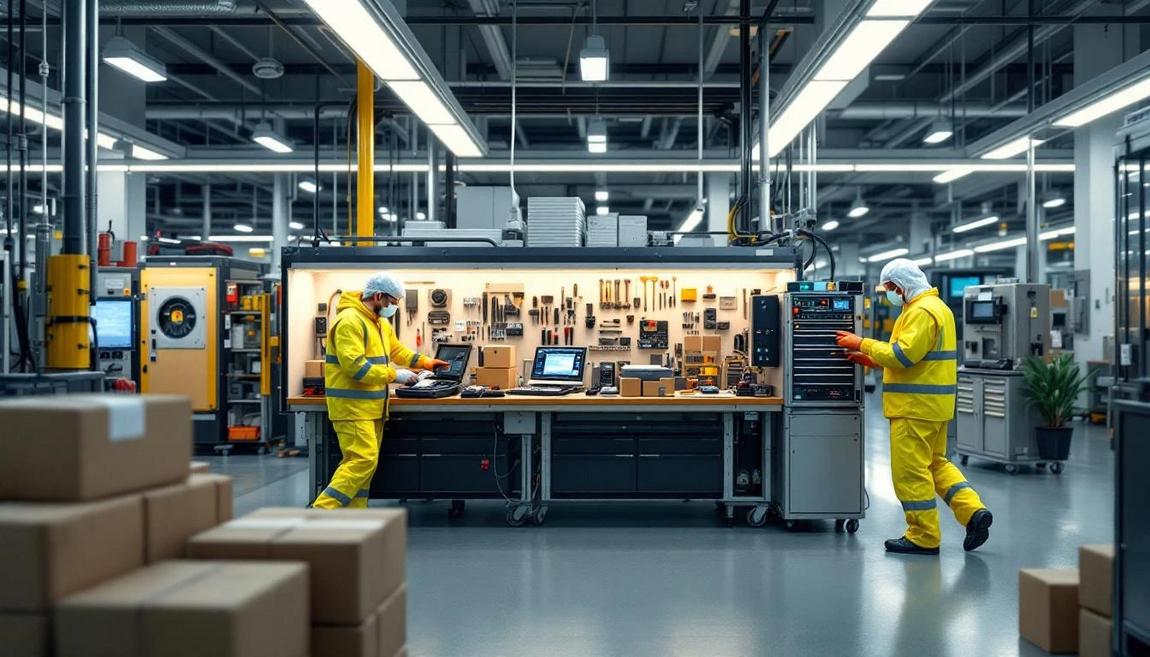
In the modern industrial landscape, maximizing the use of equipment is essential to ensure increased competitiveness. The concept of Overall Equipment Effectiveness (OEE) is a cornerstone for driving this performance. A well-designed OEE KPI dashboard can catalyze this approach, providing production managers with an overview of the strengths and weaknesses of their production lines. Without such a tool, identifying bottlenecks and sources of waste becomes a complex task, placing a heavy burden on teams and inevitably affecting sales.
OEE optimization challenges are often rooted in a fragmented view of operations. A lack of standardized performance indicators, coupled with inadequate real-time monitoring, can mask the real causes of stoppages and inefficiencies. This lack of visibility has a direct impact on OEE, resulting in lower product quality, higher operating costs and longer lead times. Digitization and real-time data analysis are essential to counter these problems and significantly improve overall productivity.
To overcome these obstacles, the integration of appropriate OEE KPI dashboards becomes an indispensable lever. By digitizing the shop floor, tools such as those offered by
A concrete example of the successful application of these principles can be seen in an automotive parts manufacturing plant. Using a customizable OEE dashboard, managers were able to identify and reduce unscheduled downtime by 15%. The data collected enabled teams to quickly implement improvements, such as optimizing maintenance cycles and adjusting machine rates. This case study illustrates the impact that improved visibility can have on productivity and operating margins.
Taking the decision to implement or refine an OEE KPI dashboard is a strategic step for any company seeking to maximize performance. Relying on solutions such as those from TeepTrak not only provides an accurate mapping of the current operational state, but also a powerful decision-making tool for increasing efficiency. Commitment to a Data Driven approach, supported by continuous analysis and real-time monitoring, positions your company for substantial gains in terms of quality, costs and innovation.
FAQ
Question 1: How does an OEE KPI dashboard improve performance?
An OEE KPI dashboard centralizes critical data on availability, performance and quality. It enables inefficiencies and bottlenecks to be quickly identified, so that targeted corrections can be applied to improve OEE and productivity.
Question 2: What role does digitalization play in OEE monitoring?
Digitization enables data to be collected and analyzed in real time, giving immediate visibility of equipment status. This facilitates informed decision-making for continuous improvements, and reduces costs linked to production inefficiencies.
Question 3: What are the expected benefits of a structured OEE project?
Companies following a structured approach to OEE can expect significant reductions in downtime, improved product quality and optimized production costs. These gains translate into increased competitiveness in the marketplace.

0 Comments