
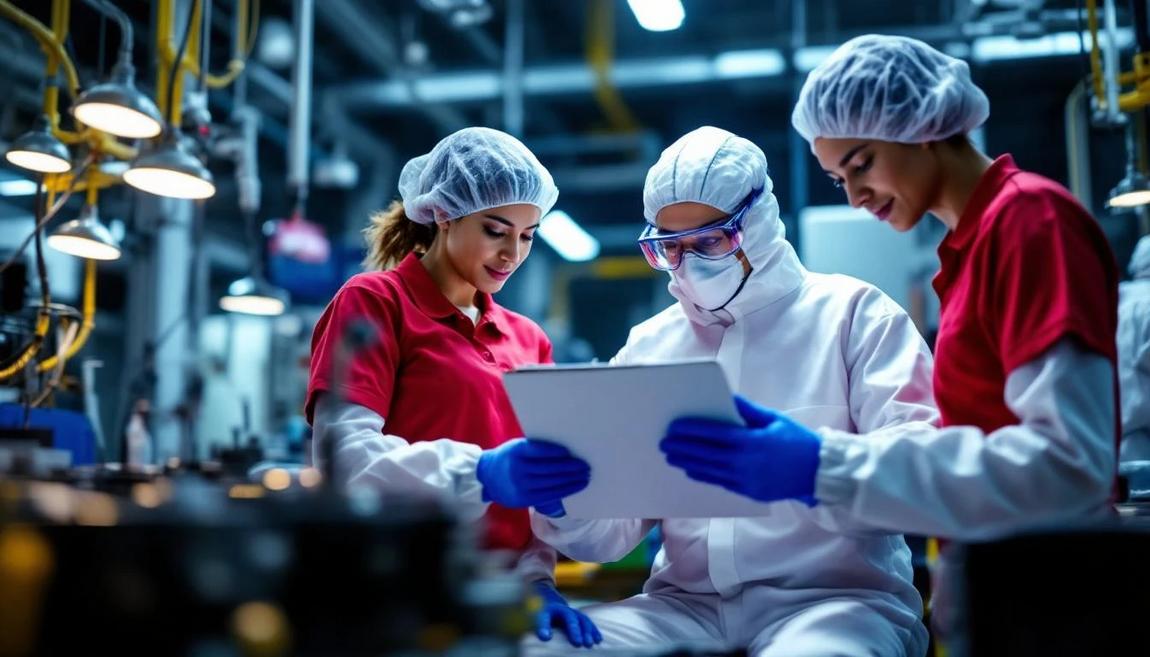
In the world of Industry 4.0, integrating the ‘smart factory’ concept into industrial performance management has become crucial. Overall Equipment Effectiveness (OEE) is a key indicator for assessing the efficiency with which equipment on a production floor operates. Poor control of OEE can lead to significant losses in productivity, impacting plant competitiveness and profitability. Understanding and optimizing TRS/OEE is essential to maximize resource utilization and improve production line performance.
Problems affecting overall equipment performance are often linked to multiple causes, such as unplanned breakdowns, prolonged downtime, or inconsistent production quality. These factors directly degrade OEE calculations, leading to higher associated costs and critical time losses. A lack of visibility on downtime and inefficiencies can mask opportunities for continuous improvement, increasing the complexity of resolving these issues. These impacts affect not only current production capacity, but also long-term expansion potential.
To solve these problems, it is imperative to implement real-time monitoring tools available through shop-floor digitization, as offered by TeepTrak. The integration of an
A concrete case of transition to a smart factory is the example of an automotive parts manufacturer that integrated TeepTrak solutions to digitalize its production lines. Using IoT sensors and real-time data analysis systems, the company succeeded in reducing downtime by 15% and increasing OEE by 10%. This transformation not only enabled a better understanding of bottlenecks, but also strengthened quality control throughout the manufacturing process, integrating the TRS/OEE approach for optimized steering.
In conclusion, the implementation of OEE monitoring in an intelligent factory represents a key competitive lever. Manufacturers need to focus on analyzing their key indicators, such as those offered by TeepTrak, to identify and eliminate losses, optimize performance and, ultimately, increase profitability. Starting an effective TRS/OEE project requires an accurate assessment of needs, the ability to adapt, and a willingness to commit to continuous improvement. By acting now, you can prepare your plant for success in the era of connected industry.
FAQ
Question 1: How does TRS/OEE improve plant productivity?
TRS/OEE is essential for identifying productivity losses in real time. It enables actions to be focused on reducing downtime and improving quality, thus increasing overall efficiency.
Question 2: What tools can be used to monitor OEE in a smart factory?
Solutions like those offered by TeepTrak enable precise, real-time tracking thanks to the integration of IoT sensors and data analytics platforms.
Question 3: Where do I start to optimize overall equipment efficiency?
Start by assessing the current state of your processes with an ROI calculator, and implement real-time monitoring solutions to quickly identify areas for improvement.
0 Comments