
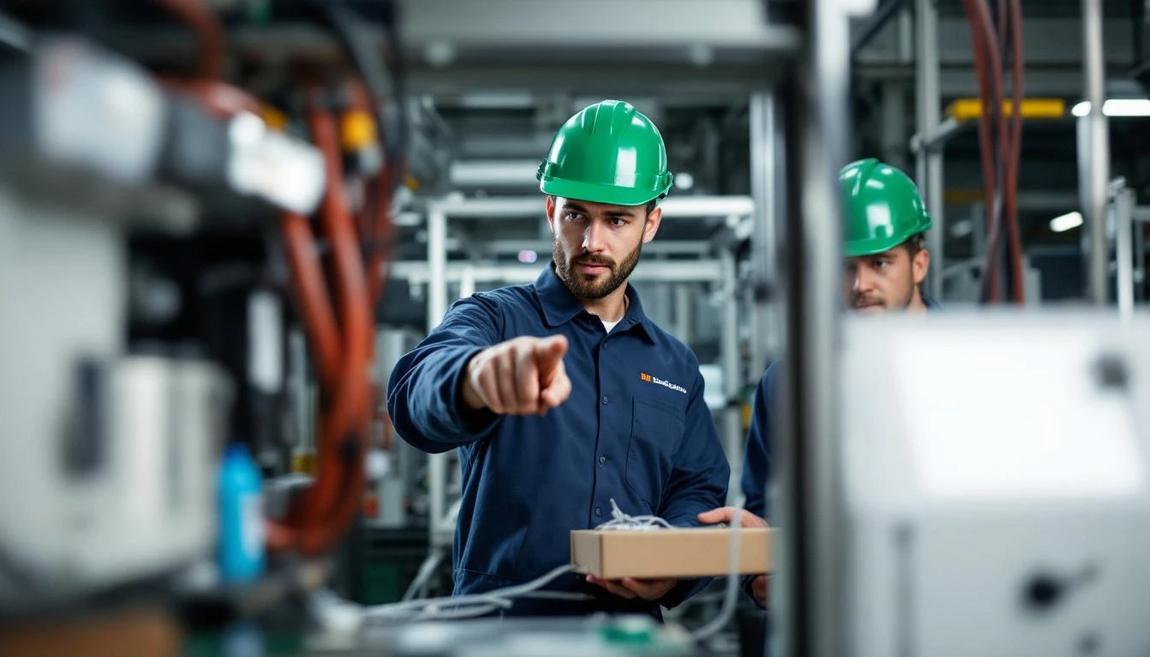
In today’s industrial context, and particularly for operational leaders and plant managers, overall equipment efficiency (OEE) is an essential indicator. Particularly in ‘affiliated rooms’, where processes are closely interlinked, optimizing OEE is crucial to ensuring competitiveness and profitability. Neglecting this aspect can lead to significant losses on production lines in terms of productivity and quality.
The causes of sub-optimal OEE in these environments are often multiple, and include unplanned downtime, equipment failures, and a lack of standardization in operations. These problems lead to prolonged downtime, increased maintenance costs and reduced end-product quality, all of which have a direct impact on the OEE metric, often measured as the product of availability, performance and quality.
To remedy these problems, several levers can be activated. The first is the implementation of a shop-floor digitalization strategy, offering real-time visibility of production lines. Solutions such as those offered by
A concrete example of the application of these solutions can be seen in a production line at a textile factory in Europe. Following analysis of the real-time data provided by TeepTrak, the company was able to identify that the majority of stoppages were due to poorly calibrated reactive maintenance. By adopting a proactive predictive maintenance approach and standardizing its processes, the plant’s OEE increased by 15% in just six months.
In conclusion, for industrial decision-makers seeking to optimize OEE in their affiliated rooms, the transition to a culture of continuous improvement is essential. Expected benefits include better cost control, improved quality and increased productivity. It’s time to measure effectively, adopt real-time monitoring technologies and launch structured TRS/OEE projects to achieve a new level of industrial performance.
FAQ
Question 1: How do you effectively measure OEE in an affiliated venue?
To measure OEE, identify the main stoppages and performance losses. Use real-time monitoring tools like those offered by TeepTrak to collect accurate data and gradually improve your processes.
Question 2: What impact does a low OEE have on profitability?
Low OEE leads to high costs due to under-utilization of resources, prolonged downtime, and production of lower quality parts, directly affecting a plant’s profitability.
Question 3: Where do I start to optimize TRS/OEE in an affiliated venue?
Start by conducting an analysis of current data to identify key bottlenecks, then implement SRT tracking solutions like those from TeepTrak for increased visibility and continuous improvement.
0 Comments