
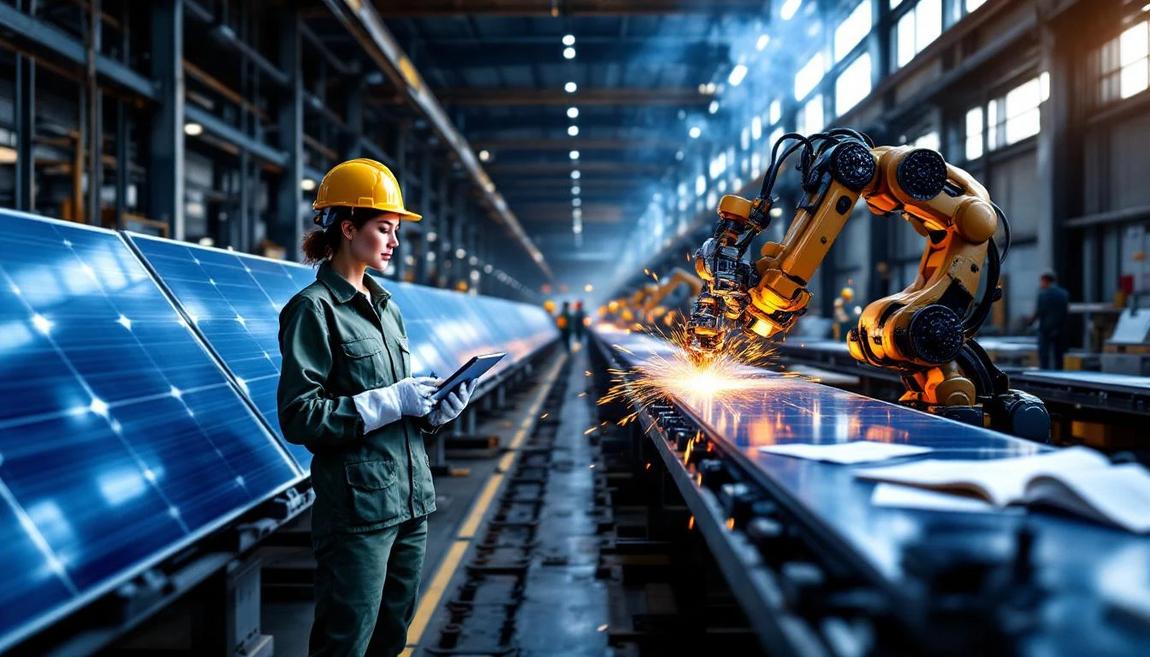
In today’s industrial context, the design of an effective OEE (Overall Equipment Effectiveness) dashboard is crucial to achieving optimized performance levels on production lines. The main challenge lies in plants’ ability to visualize in real time the factors affecting their synthetic yield rate. A well-designed OEE dashboard enables operational managers and executives to track and analyze key data, facilitating informed decision-making to improve overall equipment efficiency.
The underlying causes of an inefficient OEE dashboard often include confusing data presentation and limited integration of multiple information sources. This can lead to difficulties in identifying downtime and lost productivity, increasing production costs and reducing end-product quality. In the absence of a clear, consistent interface, plants struggle to exploit the full potential of performance indicators such as uptime, performance and quality.
A number of levers can be used to overcome these challenges. Firstly, digitizing the shop floor with solutions such as those offered by TeepTrak plays a key role, providing real-time visibility of all operations. Secondly, implementing an intuitive, uncluttered design makes it easier to read and analyze critical data. Using appropriate visualizations, such as Pareto diagrams for downtime, enables continuous improvement teams to focus their efforts where impact is greatest. Tracking indicators must be clearly defined and accessible to give structural meaning to OEE measurements.
A concrete example can be seen in an electronics manufacturing plant that used an integrated OEE dashboard to detect and address its bottlenecks. Thanks to the
To initiate a successful performance improvement project via OEE dashboard design, it’s crucial to start with an accurate assessment of the current state of operations. Collaborate closely with stakeholders, define objectives aligned with strategic priorities, and start integrating powerful tools like those from TeepTrak. By continuously measuring progress, plants will not only achieve greater efficiency, but also stimulate a culture of continuous improvement. Don’t hesitate to use the industrial ROI calculator to directly estimate the economic benefits of such optimizations.
FAQ
Question 1: How can a well-designed OEE dashboard improve productivity?
A well-designed OEE dashboard provides a clear, real-time visualization of production data, enabling rapid problem identification and targeted performance optimization, improving overall productivity.
Question 2: What is the impact of poor dashboard design on OEE?
Poor design complicates data analysis, making it difficult to identify inefficiencies and thus increasing downtime and lost productivity, which in turn reduces OEE.
Question 3: Where do I start to improve my OEE dashboard?
Start with a thorough analysis of your information needs, involve stakeholders in the design, and integrate high-performance digital tools like those from TeepTrak.


0 Comments