
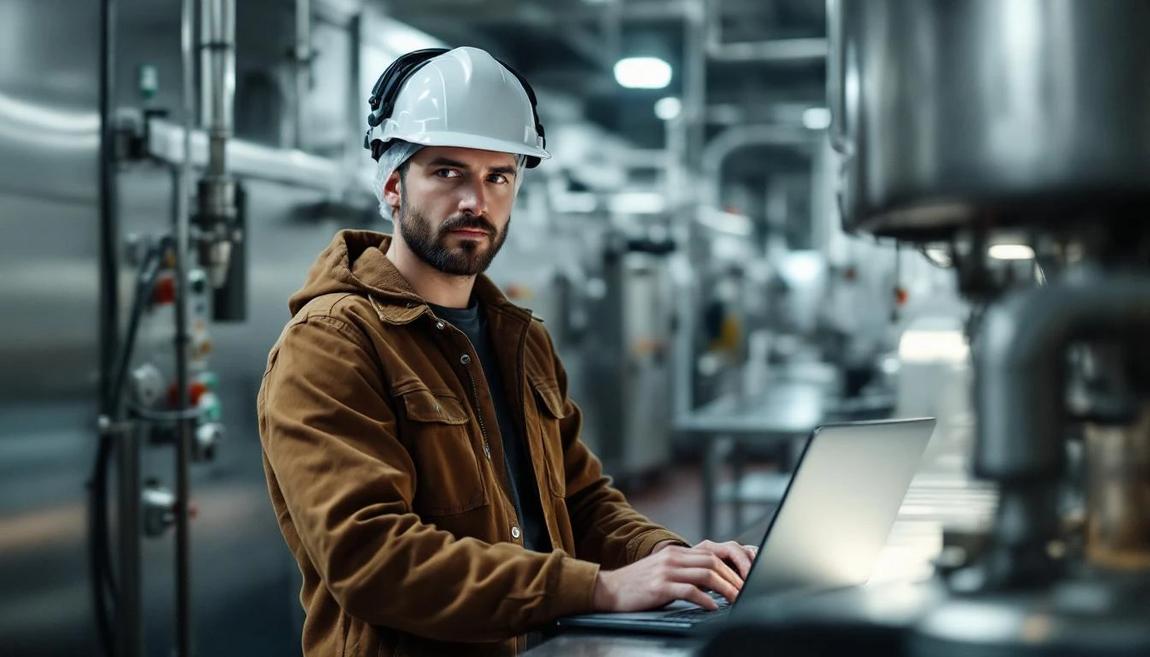
In the industrial sector, optimizing overall equipment efficiency (OEE) is a crucial issue for plants. This key performance measure synthesizes machine availability, performance and quality. However, many companies struggle to reach their full potential due to inefficient maintenance practices. Total Productive Maintenance (TPM) has emerged as an indispensable strategy for minimizing unplanned downtime and improving equipment reliability – essential elements for any plant manager concerned about competitiveness. Adopting these methods is becoming essential in an environment where every minute of downtime translates into significant financial losses.
Difficulties observed in maintenance management often stem from causes such as fragmented inspection processes, a lack of support for continuous improvement, or the absence of real-time data to steer activity. These problems can lead to a deterioration in OEE (Overall Equipment Effectiveness), affecting overall productivity. The consequences can be measured in terms of production delays, waste and lower quality, prompting managers to rethink their strategies. Indeed, the impact on production costs and customer satisfaction cannot be underestimated.
To meet these challenges, it is essential to implement solutions structured around TPM and real-time performance monitoring via tools like those from TeepTrak. Digitizing the shop floor enables you to capture and analyze crucial data for reducing downtime and optimizing OEE. For example, integrating real-time dashboards can not only help to better detect anomalies, but also to quickly adjust processes. OEE solutions and real-time performance monitoring offer just these kinds of advanced tools.
Let’s take the case of a manufacturer of mechanical components who succeeded in transforming its production thanks to TPM. Previously, the plant suffered from frequent, unanticipated breakdowns that increased costs and slowed production. By integrating an advanced real-time monitoring system for your OEE, they were able to reduce unplanned downtime by 30% in two years, resulting in a significant increase in productivity and improved product quality. TeepTrak has helped the company collect valuable data to optimize their maintenance and resources.
For an industrial decision-maker, starting an improvement project based on TRS/OEE means first of all understanding the key performance indicators and structuring your maintenance approach around clear, measurable objectives. Take advantage of monitoring solutions like
FAQ
Question 1: How does Total Productive Maintenance (TPM) impact OEE?
TPM improves OEE by reducing downtime, increasing machine availability and optimizing maintenance processes. The result is improved equipment reliability and performance.
Question 2: Why is continuous OEE measurement crucial?
Continuous OEE measurement enables the rapid identification of weak points in production processes. These measurements guide continuous improvement actions and ensure responsiveness to daily challenges.
Question 3: Where do I start to improve my plant’s OEE?
Start by analyzing current performance data to identify the main sources of losses. Then implement real-time monitoring tools like those from TeepTrak to optimize overall equipment efficiency.
0 Comments