
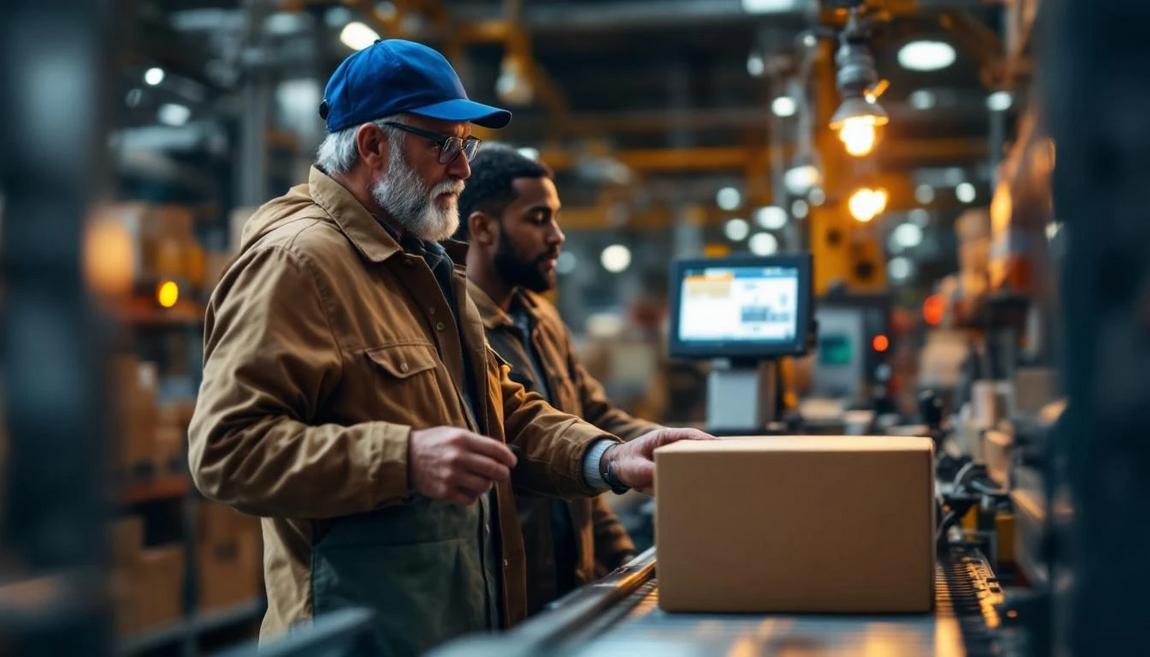
In today’s industrial world, increased competition and the need to optimize every resource mean that plants need to keep a clear eye on the performance of their equipment. Overall Equipment Effectiveness (OEE) is a key indicator that helps quantify this performance. However, without the right OEE dashboard, it can be difficult to track, analyze and improve this efficiency. An OEE manufacturing dashboard is not a luxury, but a necessity for plant managers wishing to reduce downtime and improve productivity.
Several factors explain why these dashboards are often under-utilized: lack of real-time data, complexity of monitoring tools or absence of a clear implementation strategy. Without visibility into production stoppages, bottlenecks remain unnoticed and unresolved, resulting in significant economic losses. The cost of idle equipment, production delays and quality defects have a negative impact on OEE and generate additional costs.
The solution lies in the transparency and digitization of the shop floor, thanks to solutions such as those offered by TeepTrak. A modern OEE dashboard can display data in real time, enabling in-depth analysis of the root causes of production stoppages. With these tools, it becomes possible to limit inefficiencies, improve quality and maximize asset utilization through a well-targeted continuous improvement strategy. To achieve this, it is crucial to track relevant indicators and set up regular performance reviews.
Let’s illustrate this with the example of a production line in a manufacturing plant that has integrated OEE into its strategy. Initially, the company was faced with machine utilization below expectations, caused by unexpected stoppages and uncoordinated maintenance. By installing an OEE dashboard with TeepTrak, the company gained a real-time overview of its processes and reduced downtime by 15%, while increasing the quality of its finished products. This case demonstrates the direct impact that a well-used dashboard can have on overall productivity.
By adopting a dashboard and focusing on continuous improvement, plant managers can not only improve OEE, but also achieve considerable savings and boost their competitiveness. The first step is to measure what needs to be improved. The next step is to identify areas with potential for improvement and structure a TRS/OEE project, using solutions such as those offered by TeepTrak. By making hidden performance visible, you can more proactively steer your plant towards success.
FAQ
Question 1: How does an OEE dashboard improve productivity?
An OEE dashboard provides real-time visibility of machine performance, identifying stoppages and inefficiencies, enabling informed decisions to optimize production.
Question 2: What are the immediate benefits of using an OEE dashboard?
Immediate benefits include reduced unplanned downtime, improved product quality and savings on maintenance costs thanks to better asset management.
Question 3: Where do I start to integrate an OEE dashboard?
Start by analyzing your specific needs and choosing a suitable solution, like those from TeepTrak, to digitize your performance monitoring and connect your equipment.
0 Comments