
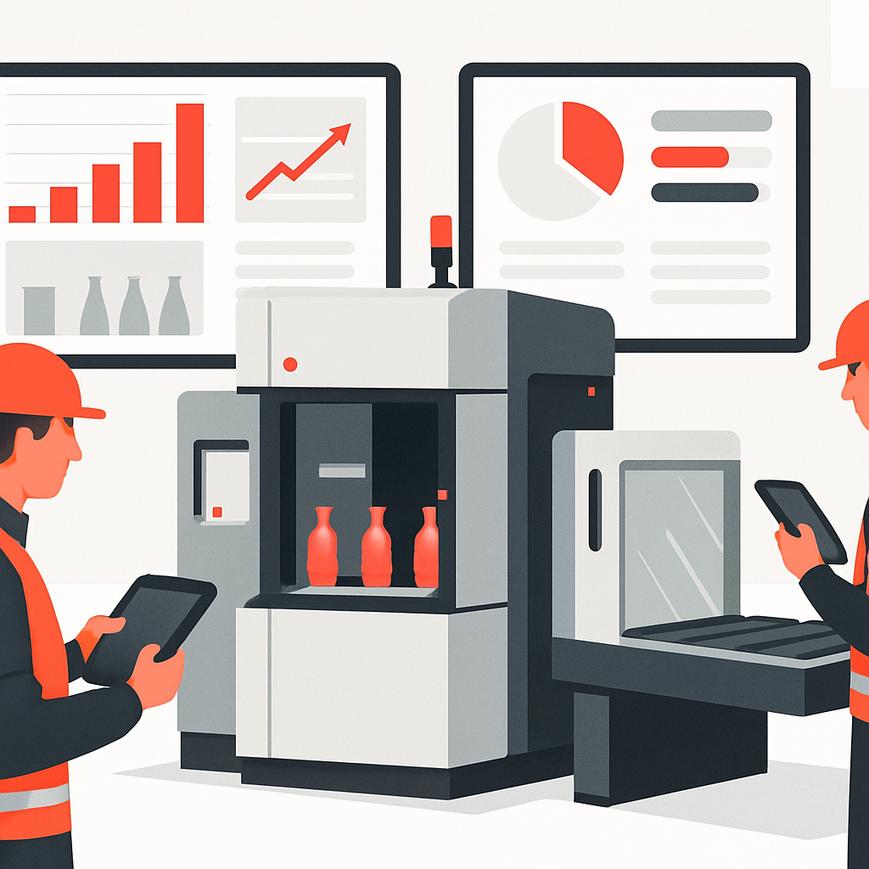
In the industrial world, the term OEE (Overall Equipment Effectiveness) is often confused with other acronyms such as OEM. Although OEE is essential for measuring the performance of production equipment, it is crucial to understand the difference between OEE and OEM, especially in delicate sectors such as the glass industry. This misunderstanding can lead to errors in process optimization and have a major impact on plant competitiveness.
One of the main causes of confusion between OEM and OEE lies in their distinct impact on productivity. While OEMs, which generally refer to original equipment manufacturers, focus on the production and supply of machines, OEEs assess the efficiency of the use of these machines by considering three key factors: availability, performance and quality. A lack of clarity on these elements can lead to unplanned downtime and increased costs due to sub-optimized equipment.
To resolve these misunderstandings and optimize performance, it’s crucial to integrate a robust OEE methodology. This includes monitoring key performance indicators (KPIs), implementing continuous improvement practices such as Lean Manufacturing, and digitizing the shop floor for real-time analysis. With tools like those provided by TeepTrak, managers can monitor and adjust their processes effectively.
Consider a glass manufacturing plant that used OEE to transform its operations. The plant implemented a real-time tracking system that identified bottlenecks in their production line. Thanks to TeepTrak, they were able to reduce downtime by 20% in six months, significantly increasing their OEE.
In conclusion, understanding the difference between OEMs and OEEs helps to better manage equipment performance and improve profitability. Decision-makers should focus on downtime analysis and continuous improvement, using digital solutions such as those offered by
FAQ
Question 1: Why is it important to differentiate between OEMs and OEEs?
Differentiating between OEMs and OEEs is crucial to avoid confusion that can impact industrial performance strategy and equipment management.
Question 2: How does the OEE improve production in the glass industry?
OEE identifies and resolves inefficiencies in the production process, reducing downtime and increasing quality and performance.
Question 3: Where do you start to integrate effective OEE practices?
Start by auditing current performance, defining clear KPIs, and deploying real-time monitoring solutions like those offered by TeepTrak.


0 Comments