
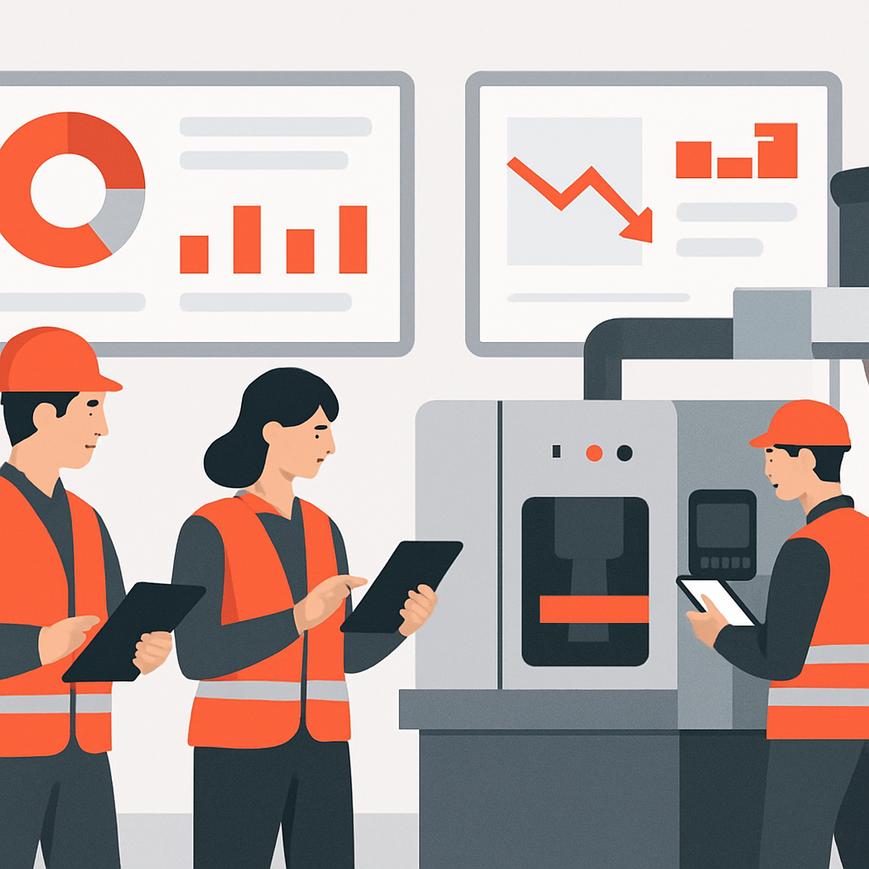
In the industrial sector, optimizing Overall Equipment Effectiveness (OEE) is crucial to maximizing production line performance. Yet many plants struggle to identify and effectively influence the key factors that impact their OEE. It’s not just a performance indicator, it’s a strategic lever for cutting costs, reducing downtime and improving quality. By better understanding OEE factors, plant and production managers can direct their continuous improvement efforts in a more targeted and strategic way.
The factors influencing OEE are numerous and vary from plant to plant, but broadly speaking they fall into three categories: availability, performance and quality. Availability is often affected by downtime and maintenance management. Performance is impacted by production rates below the equipment’s maximum capacity. Finally, quality is called into question by the number of defective parts. These synergistic factors can have a major impact on operating costs and competitiveness.
Several levers can be used to improve OEE. One approach is to adopt continuous improvement methods such as Lean manufacturing, which seeks to eliminate waste and optimize every aspect of production. Digitizing the shop floor is another powerful lever. Solutions like those offered by TeepTrak provide real-time performance monitoring, enabling anomalies to be quickly identified and proactively remedied. Monitoring key performance indicators in real time therefore becomes essential for making informed decisions.
A case in point is a food factory that was struggling to keep its OEE above 70%. By adopting a shop floor digitalization solution, the plant was able to reduce downtime by 20% and increase productivity by 15%. Thanks to TeepTrak’s real-time TRS tracking tool, the plant was able to precisely identify the main bottlenecks and initiate targeted corrective actions, thus improving its overall efficiency.
In conclusion, understanding and influencing OEE factors is essential for any plant seeking to improve its operational performance. Implementing a structured continuous improvement project that integrates the measurement and tracking of key indicators with solutions like TeepTrak can offer substantial gains. Start by assessing your current OEE, identify the main levers for improvement, and consider digitizing your production processes for enhanced competitiveness.
FAQ
Question 1: How do OEE factors impact industrial performance?
OEE factors directly influence productivity, operating costs and quality. Improving OEE reduces downtime, increases production and optimizes the quality of finished products.
Question 2: What role does digitalization play in OEE optimization?
Digitization enables real-time monitoring of performance, rapid identification of anomalies, and proactive management of operations, providing an effective route to improving OEE.
Question 3: What tools can I use to start an OEE project?
Solutions like those from TeepTrak, which offer comprehensive TRS management, can be an excellent starting point for structuring and launching your OEE project.

0 Comments